The oldest classroom decision machine
A spinning wheel settles arguments that discussion cannot. Which revision topic first? Which team presents? Who cleans the board? Put the options on the wheel, spin it in front of the class, and the decision stops being yours to defend — it is the wheel's, and the wheel is gloriously indifferent to lobbying. The suspense is not a gimmick; it is the attention mechanism. A class watching a decelerating wheel is a class holding one shared breath.
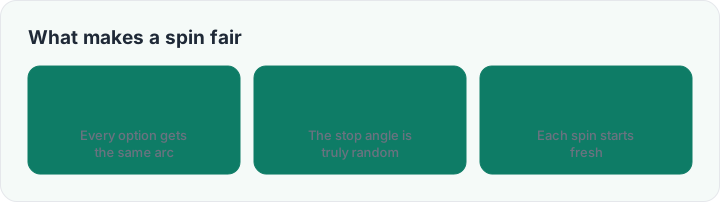
This wheel keeps the honest mechanics: entries are drawn as equal slices, the spin uses the browser's random source, and no option is weighted. Two to about twelve entries spin best — enough slices to look like a proper wheel, few enough for every slice to stay legible from the back row.
Wheel vs name picker — a quick rule
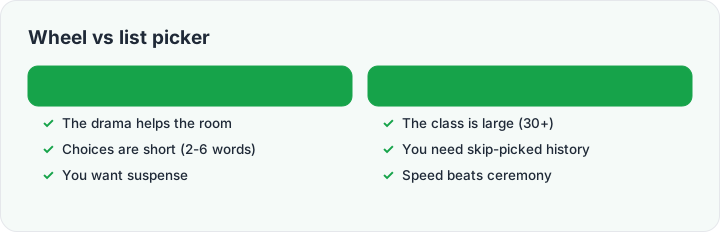
Reach for the wheel when the choices are few and the drama helps: topics, brain breaks, team point multipliers, first presenter. Reach for the name picker when the pool is your class list and fairness needs a memory — its skip-picked queue guarantees everyone a turn, which a spinning wheel (forgetful by nature) does not track. Many teachers keep both open: wheel for the headlines, picker for the rotation.
And when the task is splitting the class itself, the group generator does in one click what no wheel can — balanced groups from your whole list, with the genders spread on request.
Three spins that never miss
If you only keep three wheel routines, keep these. The revision spinner: six topics on the wheel, one spin per lesson starter - revision coverage stops depending on what you remember to ask. The presenter spinner: team names on the wheel decides who reports back, and the standing rule is that every member must be ready to present - instant whole-team accountability. The brain-break spinner: five two-minute activities (stretch, sketch, silent ball, odd-one-out, desks-back) and the wheel picks between them; the wheel takes the blame for the squat thrusts, and the credit for the sketch. Each routine costs one spin and buys a decision the class accepts without appeal.