Why a visible timer changes the room
Verbal timekeeping ("five more minutes!") is elastic, and students know it. A projected countdown is not: the ring shrinks at the same speed for everyone, groups self-regulate against it, and the teacher stops being the clock-police. The practical effects show up in transitions — "two minutes on the timer to tidy and swap" lands differently when the two minutes are visible and indifferent to pleading.
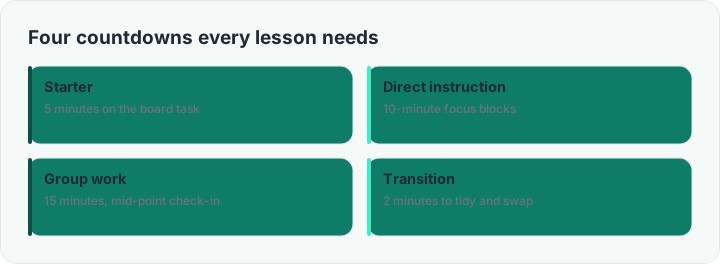
This timer is built for the projector: huge numerals, a progress ring readable from the back row, and a single soft chime at zero instead of an alarm siren. Presets cover the common lesson phases — five-minute starters, ten-minute direct instruction, fifteen-to-twenty-minute group work — and the custom field handles anything else up to three hours (assembly rehearsals included).
Pairing the timer with the rest of the toolbox
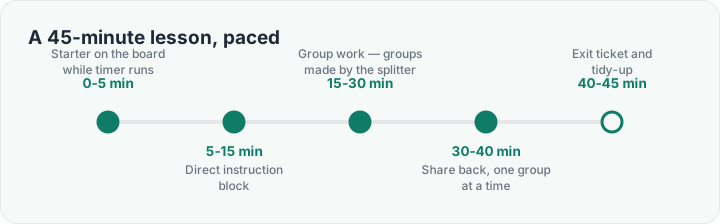
The timer completes the group-work arc: split the class with the group generator, run the work phase on this countdown, spin the wheel to choose which group reports back, and keep the name picker warm for individual accountability inside groups. Four tools, one workflow, zero login — and every number (lists, picks, phases) stays on your device.
One habit worth stealing from veteran teachers: start the timer before giving the instruction. The running clock creates the urgency that makes instructions land the first time; the other way round, the first minute is spent settling while the clock waits.
Numbers worth knowing
Two timing patterns recur in classroom practice. First, transitions expand to fill whatever time they are given - which is why two visible minutes moves a room faster than "when you are ready." Second, group work has a natural rhythm of roughly twelve to eighteen minutes before on-task energy dips; a scheduled mid-point check-in (one minute, groups report progress in one sentence) resets it without stopping the work. Neither number is magic; both are better watched on a shared clock than guessed at from the front. Over a term, a teacher who runs visible timers on every seam recovers minutes that used to evaporate - minutes that are yours to spend on the actual lesson.