Classroom Management Ideas That Scale
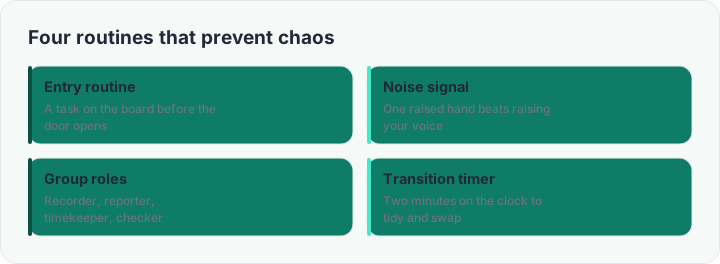
Verdict first: classroom management is not charisma — it is a handful of boring routines, started on day one, enforced with the calm of a metronome. The four below (entry routine, noise signal, group roles, transition timer) prevent most of the chaos teachers dread, and every one of them is free.
The entry routine: win the first three minutes
Chaos is decided at the door. A task on the board — a question to copy, a quick starter on the projector — plus a standing expectation that students begin before the bell finishes turns arrival time into working time. The secret is that the routine does not need your attention once it is habit; you spend your capital elsewhere. A visible countdown on the starter makes the expectation impersonal and self-policing.
The noise signal: one raised hand
Volume has a thermostat, and it is you. Pick one signal — raised hand, chime, countdown from five — and train it until obedience is automatic: signal, wait, acknowledge the tables that settle first, never shout over the noise (shouting teaches the class that your volume is negotiable). One consistent signal beats a repertoire of escalating pleas.
Group roles: structure beats supervision
Group work wobbles when everyone is responsible for everything and no one is responsible for anything. Four roles fix it: recorder (writes), reporter (speaks to class), timekeeper (owns the countdown), checker (verifies everyone can explain the answer). Rotate roles each session so no student is typecast as the scribe. The roles do your supervising for you — the timekeeper manages the timer, the reporter owns the output.
The transition timer: make tidying a game with a clock
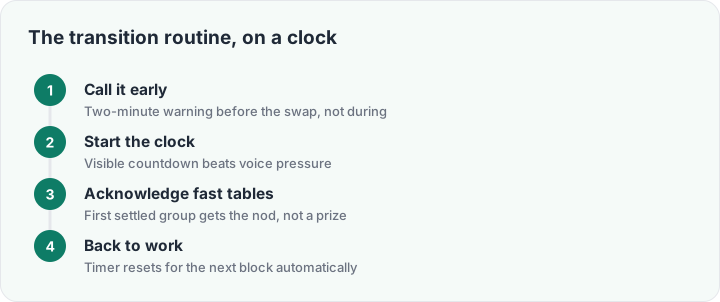
The messiest minutes of any lesson are the seams: setting up, swapping, packing away. A visible two-minute countdown converts the seam into a challenge ("beat the ring") and removes your voice from the pressure. Combined with the entry routine, the seams become the most disciplined part of the lesson — which is exactly backwards from how unmanaged classrooms run.
None of these routines needs a purchase order. For the grouping half of the equation, the group generator and the name picker cover the two most negotiation-prone moments of any lesson — who works together, and who speaks next.