Classroom Icebreakers for Week One
Verdict first: the best week-one icebreakers are short, structured and low-stakes — games where the social risk is small and the laughter is shared. These five need almost no prep, work across ages, and each one ends with your classroom a little more welded together than it found it.
Two Truths and a Lie — the instant classic
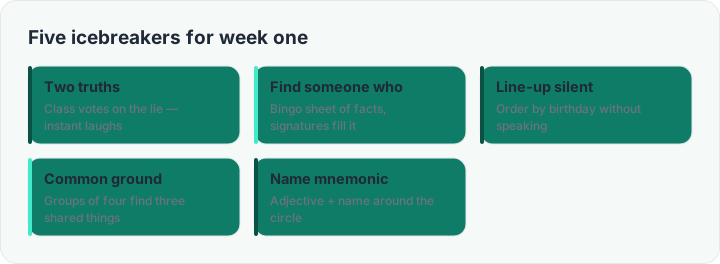
Each student writes two true statements and one lie; the class votes on the lie. The genius is the built-in alibi: everyone speaks (three short lines), everyone listens (voting is the reason), and the surprises do the bonding — quiet students are suddenly the most interesting people in the room. Keep reveals snappy: thirty seconds per student, a visible timer keeps the pace honest.
Find Someone Who — structured mingling
A bingo sheet of facts ("find someone who has a pet", "who has moved house", "who speaks three languages") and students collect signatures. The structure does the social heavy-lifting: approaching a stranger has a script and an end. Cap it at ten minutes and debrief the funniest discoveries.
The Silent Line-Up — teamwork without talking
Order the class by birthday (or height, or alphabetical of first school) without a word allowed. The silence is the fun — gestures and improvised sign language carry it — and the debrief writes itself: what did communication feel like with no words? It is an icebreaker and a teamwork lesson wearing the same coat.
Common Ground — small groups, real findings
Groups of four (the group generator mixes them beyond friend clusters) have three minutes to find three things every member shares — not the obvious (school, age) but real ones (everyone has broken a bone; everyone can name a volcano). The discovery that strangers share specifics is the fastest route to a room feeling like a class.
Name Mnemonics — the circle that teaches names
Around the circle: adjective plus name ("Athletic Ava"), each student repeating everyone before them. By the end of one lap, thirty names have been rehearsed by thirty brains — including yours. It is the least glamorous and most practically useful icebreaker in the book, and it never stops working.